Finding the right parts for your Ford 2000 tractor can be challenging, but this guide simplifies the process. We'll cover identifying your tractor model, locating parts diagrams, understanding their symbols, and sourcing parts effectively – from OEM to aftermarket options. Keeping safety paramount, we'll empower you to get your Ford 2000 back to peak performance. For hydraulic system questions, see our guide on hydraulic fluid location.
Identifying Your Ford 2000 Model: Unlocking the Serial Number
The first step is determining the precise year of your Ford 2000. There are two main production runs: 1961-1964 and 1965-1974, each with unique part specifications. The serial number holds the key.
Locate the Serial Number: This unique identifier is usually found stamped on a metal plate affixed to the tractor's frame. Common locations include the left side near the front, or potentially near the steering column (for older models). A flashlight and careful inspection are essential. Do you have trouble locating the serial number? Consider consulting your owner's manual or online Ford tractor forums for assistance.
Decode the Serial Number: Once located, carefully transcribe the serial number. This number will directly identify your tractor's year of manufacture. Various online resources and specialized Ford tractor manuals can help you decipher this information. Why is accurate identification critical? It ensures compatibility with the correct parts diagrams, preventing costly mistakes.
Confirm the Engine Type: Knowing your engine type (e.g., 2.4L 4-cylinder or 2.6L 3-cylinder) is also crucial for accurate part selection. This information is typically found in your owner's manual. Do you lack your owner's manual? Online forums and vintage tractor parts suppliers may be able to help.
Finding Your Ford 2000 Parts Diagram: Online Resources
Today, accessing parts diagrams is mainly done online. Several reputable suppliers specialize in parts for classic tractors.
Reputable Online Suppliers: Begin your search by using a web search engine, such as Google or Bing, to find reputable online tractor parts suppliers. Many offer detailed parts diagrams searchable by model year and serial number. Remember to verify the online supplier's reputation and customer reviews.
Navigating Supplier Websites: Upon locating a suitable supplier, utilize their search tools. Most allow for searching parts by serial number, model year, or engine type, simplifying the process. Expect to find detailed diagrams, exploded views (showing parts assembled and disassembled), and part number listings. Did you find your diagram? Review it carefully – part numbers are essential for ordering.
Alternative Methods: If online diagrams prove elusive, consider checking with vintage tractor clubs or forums. These communities often have members with experience and access to archived manuals and parts information. Is your tractor incredibly rare? Reaching out to Ford tractor specialists or historical societies could yield results.
Understanding Your Parts Diagram: Interpreting the Visuals
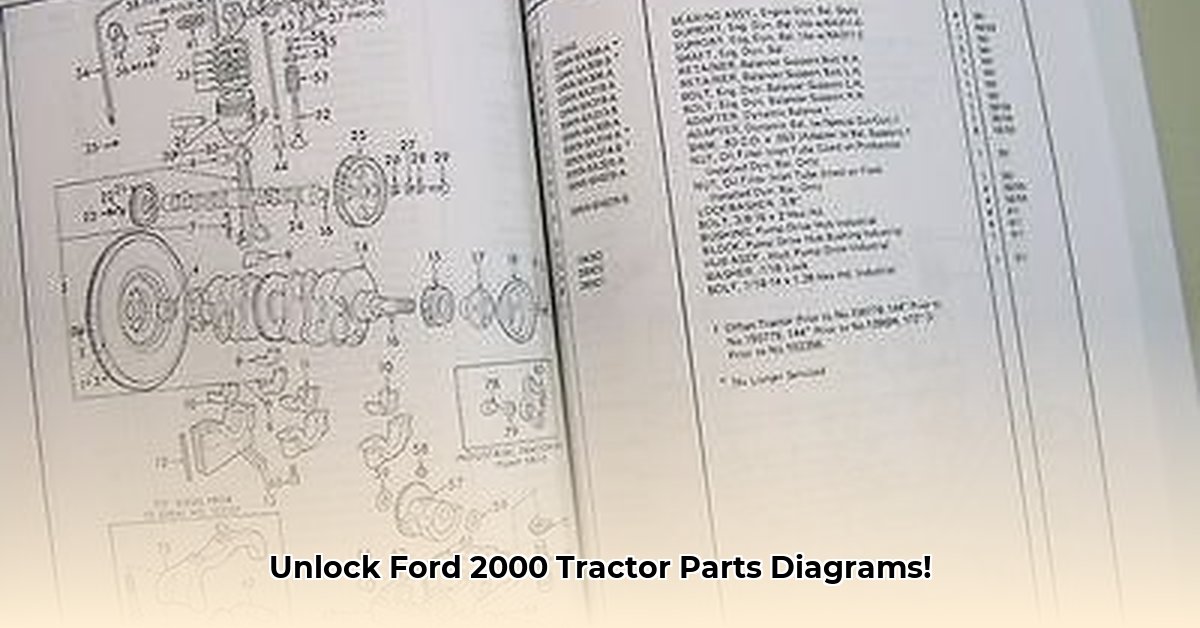
Parts diagrams are visual blueprints of your tractor. They utilize symbols, numbers, and illustrations to represent individual components.
Symbol Legend: Each diagram includes a legend explaining the symbols used. These symbols often signify part types, material, or assembly methods. Take the time to understand the legend to accurately interpret part locations and relationships.
Part Numbers: Each part is assigned a unique number. This number correlates to a detailed description and specifications within the accompanying parts list. Refer to the parts list frequently—this will ensure you order the correct component.
Exploded Views: Many diagrams utilize exploded views, showing how components assemble or disassemble. This visual representation significantly helps you understand how parts fit together, assisting in assembly and potential troubleshooting.
Sourcing Parts: Choosing Your Strategy
Several methods exist for obtaining Ford 2000 parts:
OEM (Original Equipment Manufacturer): OEM parts guarantee the best fit and quality. However, they're often expensive, especially for older tractors. Is budget a primary concern? Consider exploring alternative sourcing options.
Aftermarket Parts: Aftermarket suppliers offer a wider selection and generally lower prices. However, quality can vary significantly. When selecting an aftermarket part, prioritize suppliers with positive reviews and a strong reputation.
Salvage Yards: Tractor salvage yards can be treasure troves of affordable used parts. Nonetheless, parts condition may vary. Carefully inspect used parts for signs of wear and tear before purchase.
Part Number Cross-Referencing: Finding Compatible Alternatives
If the exact OEM part is unavailable, cross-referencing becomes invaluable.
Comparable Part Numbers: Manufacturers often use similar part numbers across different models or brands for comparable parts. Research these numbers to find compatible alternatives. Always validate compatibility before purchasing a replacement part.
Online Databases and Resources: Several online databases and tractor forums enable part number cross-referencing. Leverage these resources to broaden your search and find effective substitutes.
Troubleshooting Common Issues & Safety
Regular maintenance reduces the chance of major repairs. However, some issues inevitably occur.
Common Problems: Common issues in older tractors include worn hydraulic seals, clutch slippage, or electrical faults. Your parts diagram will help identify the affected parts. For complex engine or hydraulic issues, call a professional mechanic.
Safety First: Always disconnect the battery before working on your tractor. Wear appropriate safety gear and consult your owner's manual for detailed safety procedures. Remember, safety should always be your top priority when working with machinery.
Conclusion: Your Ford 2000 Restoration Journey
Successfully locating and using Ford 2000 parts diagrams requires planning and patience. This guide equips you with the tools needed to restore or maintain your tractor efficiently and safely. Remember to always conduct thorough research, prioritize safety, and seek professional help when needed.